Keeping a pool clean and properly balanced is not easy. Ignoring small maintenance tasks can lead to expensive repairs down the road.
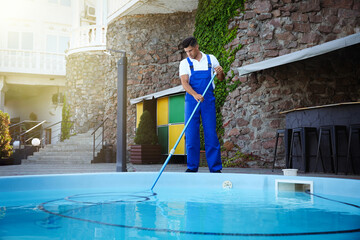
Regular cleaning and maintenance also leads to efficiency improvements that reduce energy usage, slashing utility bills. Lastly, it extends equipment lifespans, delaying costly replacements. These benefits add up to a pool that is safe, healthy, and beautiful all year round.
1. Check the Water’s pH
The pH level of your pool is the most important factor in keeping it clean, safe, and comfortable for bathers. The pH scale runs from 0 to 14, with 7 representing neutrality. If the pH of your pool is too high or low, it can corrode your equipment and damage the surface of your pool. Chlorine effectiveness is also impacted by the pH level of your pool. High chlorine levels can burn swimmers’ eyes and skin, and low levels can cause inefficient disinfection.
Maintaining an ideal pH level is critical for five main reasons:
Swimmer Comfort: Properly balanced water protects against itchy, irritated skin and eyes.
Corrosion of Pool Infrastructure: Low pH levels can corrode metal components like ladders and railings, as well as filtration equipment. It can also lead to rust, scaling, and pitting.
Bather safety: Balanced water prevents irritation to the eyes and skin caused by chemicals, sweat, and cosmetics. It also helps ensure the longevity of your equipment.
Test kits are available that can measure the pH level of your pool in just a few simple steps using a color comparison technique. If your pool is too acidic, a simple solution is to add a pH increaser or baking soda (sodium bicarbonate). However, this must be done carefully, as the wrong amount could cause pH instability. For larger pools, automatic control systems can help to monitor and adjust chemical levels to achieve the optimal pH level.
2. Brush the Walls
As part of a solid pool cleaning routine, brushing the walls of your pool keeps calcium deposits, metal corrosion, and algae buildup off your fiberglass, vinyl, or plaster surfaces. It also helps to promote water circulation in the pool, making it easier for your filtration system to capture and remove unwanted contaminants and allowing chemicals to reach every part of the pool more efficiently.
Regularly skimming the surface of the water with a skimmer helps to keep dirt, bugs, leaves, and other debris out of the pool. This is especially important during the peak swimming season and after rainstorms, as this debris can quickly find its way into the water. Brushing the tiles and walls of your pool with a soft nylon or stainless steel brush (depending on your surface type) keeps the surface clean, extending its lifespan and preventing algae growth.
It is recommended to brush your pool a minimum of once a week, and more often during peak swimming seasons or after heavy rainfall. Make sure to choose a brush that is appropriate for your pool surface; a nylon brush works well on fiberglass or vinyl pools, while a stainless steel brush may be more suitable for concrete or plaster pools. It’s also recommended that you vacuum your pool weekly to prevent the accumulation of dirt and debris on the bottom of your pool.
3. Vacuum
Just like your teeth or a hutch of Angora rabbits, your pool needs regular brushing to keep accumulated gunk off its surfaces. This prevents algae and bacteria from proliferating, and it keeps your pool water clean and healthy. In addition to brushing, skimming the surface and vacuuming the floor help keep contaminant levels low and your pool inviting.
However, simply using a manual vacuum without adjusting the settings to your particular situation is insufficient and will lead to clogged and stale gunk that gets blown around your pool instead of being trapped in the collection bag. The solution is to install a pool vacuum with a large capacity, which allows you to target specific areas and set a route for the cleaner to follow.
An automatic vacuum cleaner is a convenient option for those who don’t mind a higher price tag but want to ensure that every surface of their pool is properly cleaned. However, even the best robotic cleaners are prone to missing small areas because they use a fine mesh bag that can quickly clog with algae and suck the dirt back into the water.
For those seeking an alternative to automatic pool cleaners, there are suction-side cleaners that connect to your pump’s filtration system and rely on power from the filtration system for cleaning. These are energy-efficient and can be pre-programmed for convenience.
4. Test the Water
Water that is balanced is not only healthy for swimmers, but also helps prolong the life of pool equipment. This is accomplished through consistent testing, cleaning, and adjusting chemical levels. The goal is to create a healthy swimming environment that’s both safe and inviting.
Test strips help monitor the level of chlorine (free and total), pH level, alkalinity, calcium hardness, and more. Depending on the water source and usage, pools should be tested at least once each week. The ideal pH range is 7.2 to 7.6 and chlorine levels should be between 1 and 3 ppm. Alkalinity should be 80 – 120 ppm and calcium hardness should be 200 – 400 ppm.
Using test strips is simple: dip a strip in the water and quickly pull it back out, no need to soak it. Then compare it to the color guide on the packaging. Adjust chemicals based on the readings and keep a logbook to record results for future reference.
Regular cleaning, brushing, and vacuuming are the keys to keeping pool water clear of debris and stains. Other routine maintenance tasks include checking the filter gauge to ensure it reads correctly, inspecting pool lights for deterioration, and replacement of bulbs and lubricating seals and O-rings. It’s also a good idea to keep a first aid kit near the pool and inspect it regularly for any expired items.